Marketing Insights
What's the best SEO and AEO strategy?
Discover the best SEO and AEO strategy: how to optimize content and effectively increase AI visibility.
 Go to home
AI has been revolutionizing content marketing with AEO and entity-based SEO. Ensure your content remains relevant and authoritative in 2026.
In 2026, AI is reshaping content marketing by shifting the battle from “who ranks highest” to “who provides the most precise, contextual answer.”Traditional SEO is no longer enough on its own—answer engines and generative AI now surface entities, relationships, and intent-based answers rather than just keyword-matched pages. This is exactly where AEO and entity-based SEO become critical.
AEO focuses on making your content the best possible answer for a specific question, structured so AI can understand and reuse it. Entity-based SEO goes a step further by linking your content to clearly defined entities and their relationships, helping search engines and AI interpret context, authority, and intent across multiple queries.
Content Marketing & AI in 2026 is no longer about pushing out more content, but about designing every asset so that humans and AI systems can instantly understand, reuse, and trust it across the entire customer journey.
According to the Neil Patel blog, entity-based SEO focuses on clearly defined people, brands, products, and concepts, and the relationships between them, rather than isolated keywords.
Google defines an entity as “a thing or concept that is singular, unique, well-defined, and distinguishable.” They can be people, places, products, companies, or abstract concepts. When Google identifies the primary entity behind a page, it can rank it for a broader range of relevant queries. Structuring your site with topic clusters, internal links, and consistent terminology helps search engines understand how content fits together.
Search engines and AI systems increasingly rely on entity context to interpret intent, not just keywords. Maintaining consistent signals across pages and trusted third-party profiles strengthens entity recognition, boosting long-term visibility and relevance.
The brands that win in 2026 will be those that combine AEO and entity-based optimization— so they’re not only visible in search results, but consistently cited in AI-generated answers, email journeys, and every touchpoint of the customer lifecycle.
Entity-based SEO focuses on building context and authority around people, brands, products, or concepts, helping search engines understand what your content is about. AEO (Answer Engine Optimization), on the other hand, is about structuring content to give clear, precise answers to user questions, especially for AI-driven or voice search.
Simply put: entity SEO builds meaning, while AEO delivers the answers searchers are looking for.
AI answer engines don’t “scan” your content like a traditional crawler – they deconstruct it.
| Step | What AI Answer Engines Do | What This Means for Your Content |
| 1 | Identify the main entity or topic of the page and map it to a broader knowledge graph. | Make it obvious who/what the page is about (brand, product, use case, problem) and keep naming consistent across your content. |
| 2 | Look for clear, self‑contained answer blocks that can be reused in different contexts. | Use definitions, how‑to steps, comparisons, and short paragraphs with good headings, semantic markup, FAQs, and consistent terminology. |
| 3 | Evaluate supporting signals like internal links, external citations, and engagement | Strengthen internal linking, reference credible external sources, and optimize for engagement so your content is seen as trustworthy. |
The more your pages combine strong entity signals with answer-first formatting, the more often AI will select your content as the “best possible answer” for your ICP’s questions.
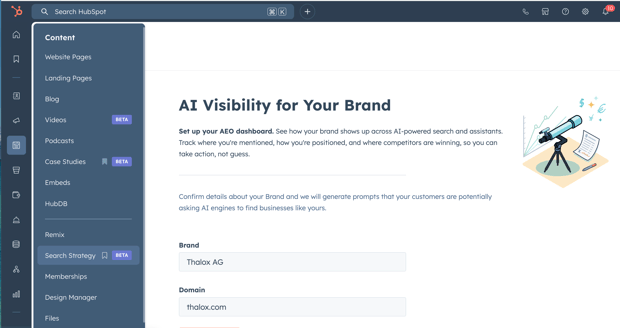
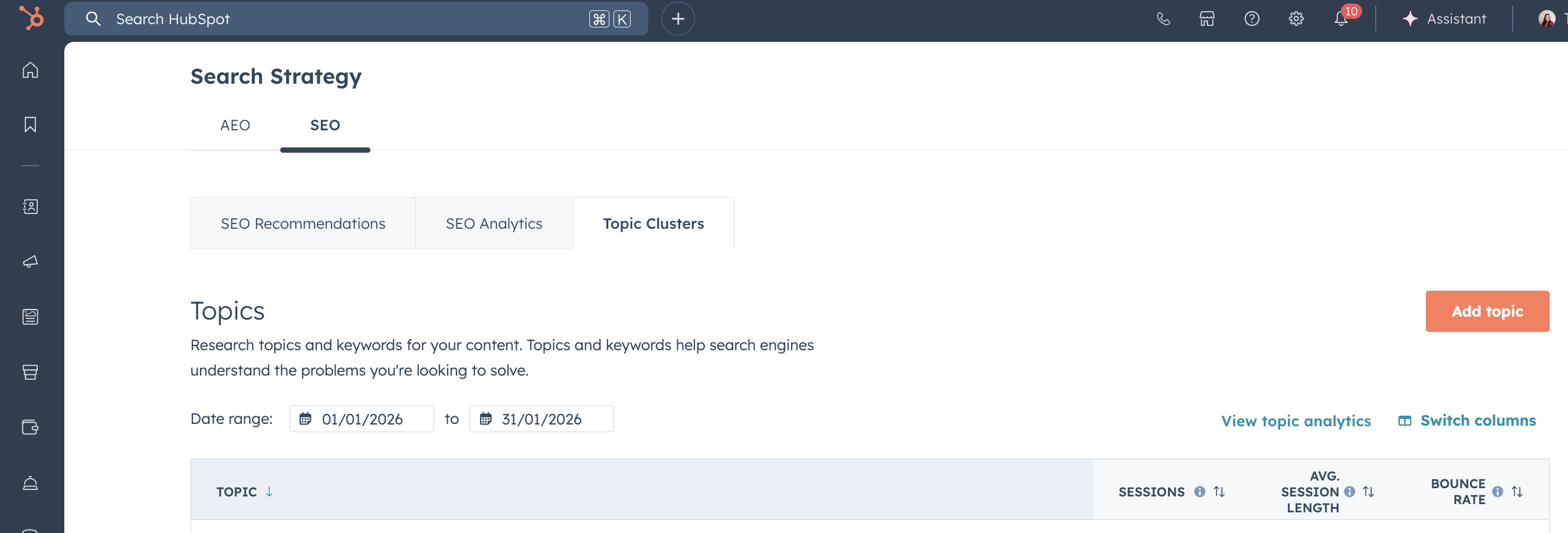
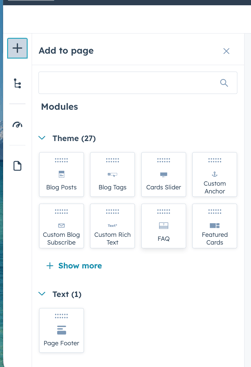
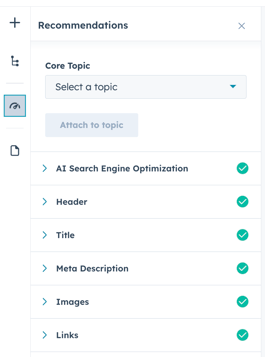
We created a fully adaptable excel template that brings all the best practices of SEO and AEO together in a practical guide.
In the template above, you'll find the action, the description, and a comment explaining its purpose. You can use the checkboxes to mark each step as completed for your articles, and easily add new columns for upcoming content if needed.
If you would like to understand more about the concept of AEO and AI visibility - read here our deep research on AEO.
Discover the best SEO and AEO strategy: how to optimize content and effectively increase AI visibility.
Discover how to create blog posts, LinkedIn posts, and landing pages with HubSpot's Content Agent, from AEO recommendations to publish-ready drafts.
Explore HubSpot's Summer 2026 product updates: new features and enhancements across Marketing, Sales, Service, CRM, Content, Commerce, and Data Hub.