If you're sending the same message to your entire database, the answer is likely yes, you are sending too many emails.
Effective email marketing is not defined by reach, but by relevance. Broad, non-segmented campaigns often result in lower engagement, increased unsubscribe rates, and diminished overall performance.
By contrast, a more targeted approach, based on audience segmentation and tailored messaging, ensures that communications are aligned with recipients’ interests and behaviors. Prioritizing precision over volume leads to stronger engagement and more meaningful results.
More emails ≠ more conversions.
Table of content:
Why sending more emails often leads to worse results
It seems logical: the more people you email, the better your results should be.
But in practice, the opposite is often true.
Why? Because not all contacts in your database are equally likely to engage.
When you send campaigns to everyone, you're blending highly engaged users with semi-interested leads and completely inactive contacts, and that mix quietly drags down your performance.
The real issue isn’t just lower numbers. It’s the lack of clarity. When all audiences are treated the same, it becomes harder to understand what’s actually working, and why.
What happens when you email everyone?
1. Deliverability takes a hit
Email providers closely monitor engagement signals. When a large portion of your audience ignores your emails, it sends a negative signal.
Over time, your sender reputation declines, and even your best campaigns risk landing in spam.
2. Your audience starts to drift away
Irrelevant emails don’t just get ignored, they create fatigue.
Open rates drop. Unsubscribes increase. And once a contact disengages, rebuilding that trust is significantly harder than maintaining it in the first place.
3. Your data becomes less useful
When you send to your entire database, your metrics become diluted.
Your most valuable contacts, the ones actually ready to convert, get lost inside averages that don’t reflect their behavior.
As a result, decision-making becomes less precise and more reactive.
So, instead of asking:
- “How many people can we reach?”
The more effective question is:
- “Who is most likely to engage right now?”
That shift changes everything, from how you build campaigns to how you measure success. More importantly, it ensures your efforts are focused where they actually drive results.
How to improve email marketing performance?
There are many ways to improve email performance: from writing subject lines and preview text that resonate with your audience, to optimizing emails for different devices, including clear CTAs and relevant links...
However, none of these efforts are truly effective without the right foundation: contact segmentation.
If your audience isn’t properly segmented, even the best subject line or design won’t deliver consistent results.
Relevance starts with understanding who you're speaking to.
By segmenting your audience based on behavior, intent, and engagement, you ensure that every element of your email, from content to timing, is aligned with the recipient.
In other words, optimization tactics matter, of course, but segmentation is what makes them work.
How Thalox Suite improves email marketing segmentation
Thalox Suite is one solution to this challenge.
Thalox Suite is an AI-powered tool that works directly inside HubSpot.
It analyzes your contacts' behavior, runs machine learning algorithms to give each one a Thalox Engagement Score, and automatically segments your database into four groups:
- High Engagers — contacts most likely to open and act on your next campaign
- Dormant Potential — contacts worth re-engaging with the right approach
- Inactive or Indecisive — contacts that need a re-engagement program or data cleansing
- No Activity — contacts with no marketing activity on record
Read more about how to use Thalox segments to create more effective campaigns.
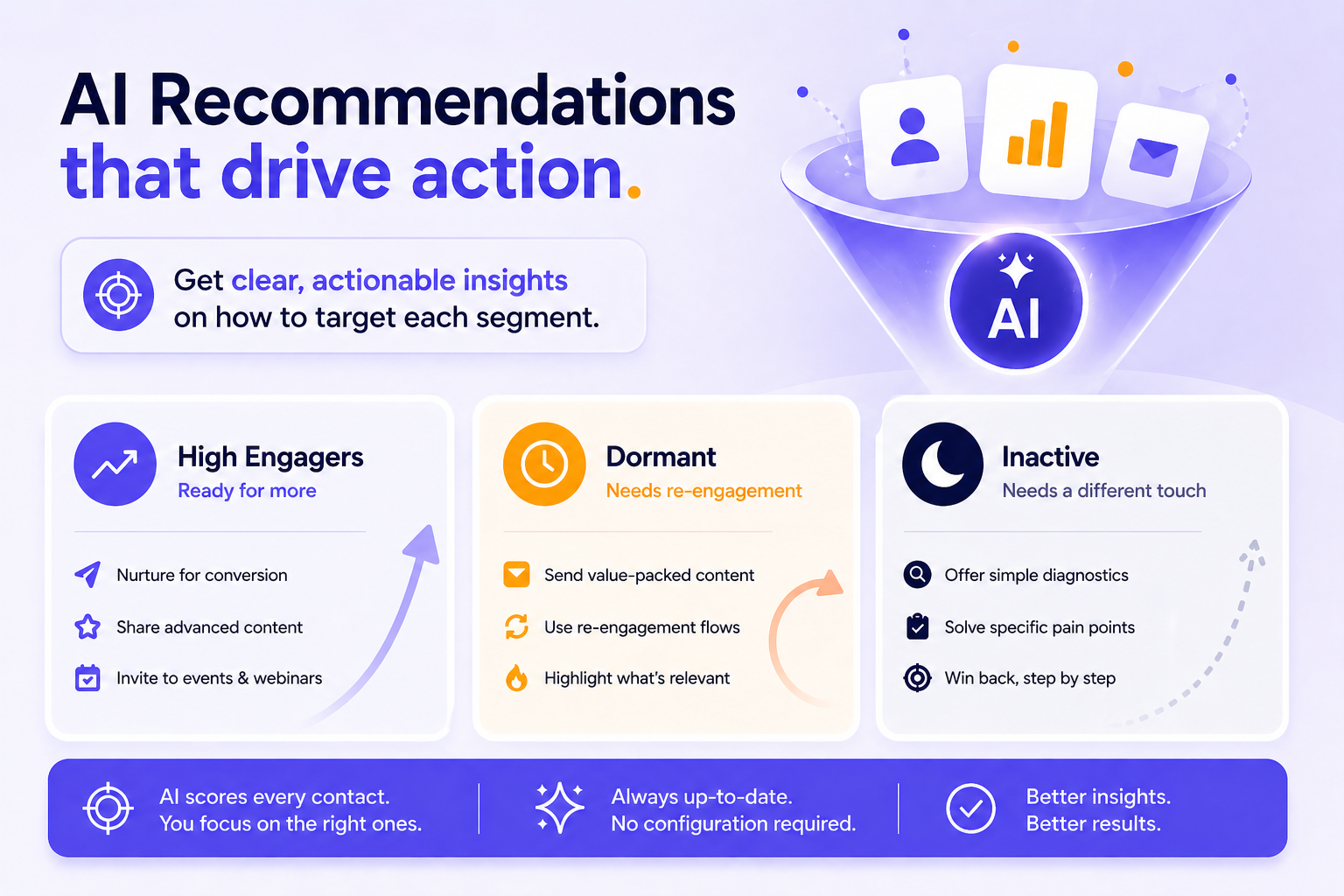
Thalox Suite also surfaces content recommendations, called predictions, based on your highest-performing subject lines per segment, so you're not just targeting the right people, you're sending them content they're actually likely to care about.The segments can be then pushed directly to HubSpot, ready to use in your next campaign.
The result? Higher engagement, fewer inactive contacts, and more conversions.
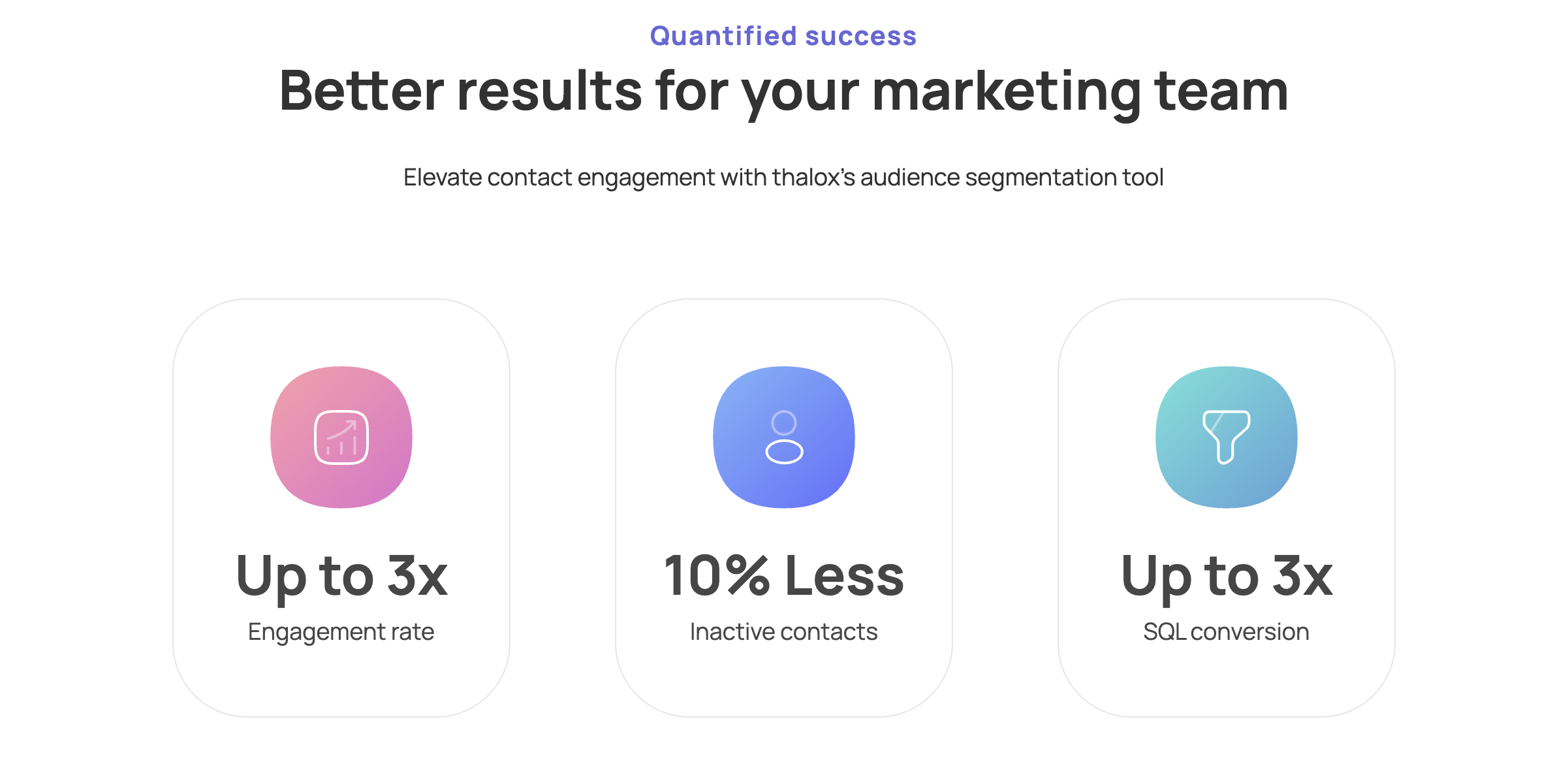
As you can see, it's not a content problem, it's a targeting problem.
Most teams assume they need better subject lines or stronger CTAs. Often, the real issue is simpler: they're emailing many/ the wrong people.
When you focus on engaged contacts, deliverability improves, messaging becomes more relevant, and results become more predictable.
If you want to improve performance without increasing volume, the starting point is prioritization, identifying which contacts are actually worth engaging before a campaign goes out.
That's exactly what Thalox Suite is built to do.
Start your free 30-day trial today!
